

The Modern Anatomy of Link Intelligence: Introducing Prof.ink
March 23, 2026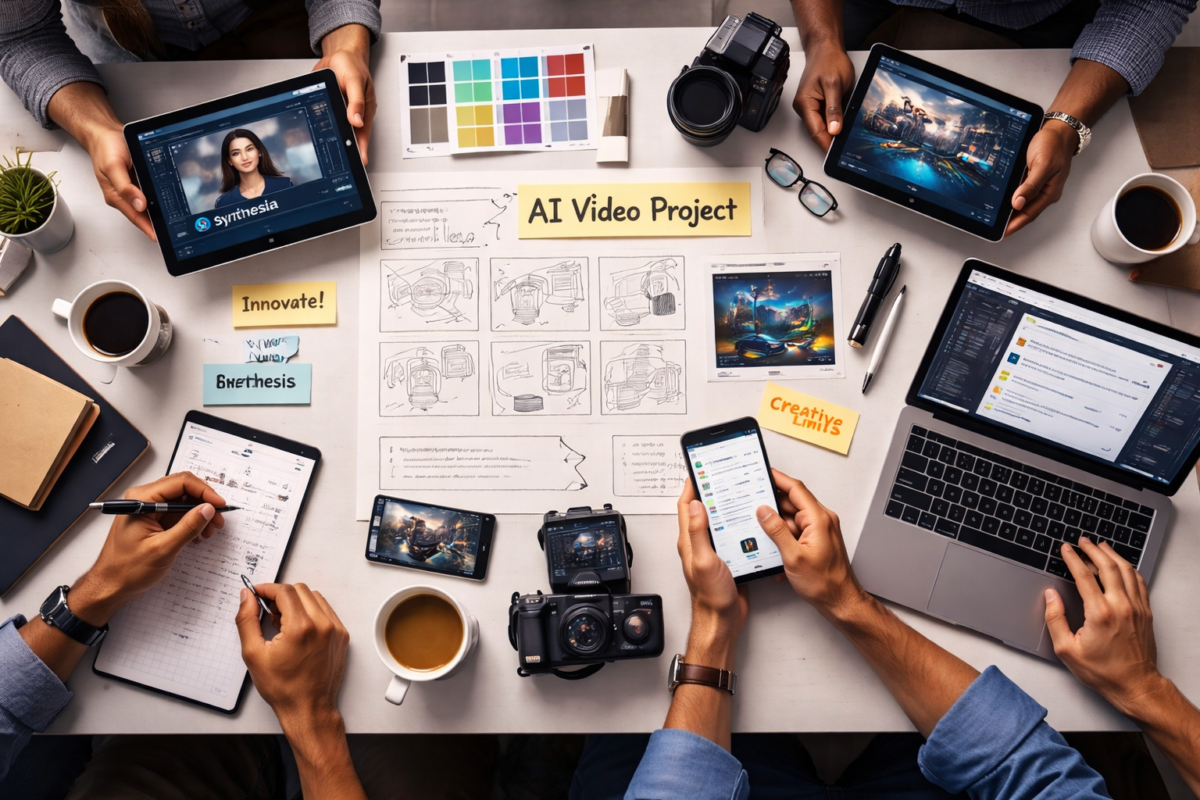
Not so long ago, I was part of a workshop where people from completely different backgrounds were placed in the same room: designers, engineers, developers, analysts, R&D specialists, marketing teams, and people from several other disciplines. Like most people, I assumed the designers would naturally lead the creative side of whatever challenge we were given. That is the story we have been taught to believe. Put a group of people together, give them a creative problem, and the “creatives” will take the lead.
Then came the task. Create a video using AI tools.
We had access to ChatGPT, Midjourney, Adobe Firefly, DALL·E, Synthesia, and several other AI tools. Everyone had essentially the same toolbox. The same amount of time. The same resources. And yet, when the session ended, something unexpected happened. The team with the most innovative, visually impressive, and well-developed concept was not the design team.
It was not even close. It was a group of people with no formal design background. People who do not sketch wireframes. People who do not open Figma every morning. People who do not necessarily think in grids, components, constraints, or design systems.
Yet, with the help of AI, they produced something that outperformed what the designers had created. That experience made something very clear to me:
AI is changing who gets to create.
AI Is Democratizing Creative Work
For a long time, creative production required specialized skills.
If you wanted to create a polished visual, you needed to understand design software.
If you wanted to produce a video, you needed to understand video editing.
If you wanted to create an illustration, you needed illustration skills.
Those skills still matter. But AI has dramatically lowered the barrier between having an idea and producing something. Someone who has never used professional design software can now describe an idea and generate a visual. Someone without video production experience can create a video concept, generate assets, write a script, and produce a presentation using AI-powered tools.
The tools that once belonged primarily to specialists are becoming accessible to almost everyone. And that changes the role of the creative professional.
What Happens When Everyone Has Access to the Same Creative Tools?
The interesting question is not whether AI can generate something impressive. We already know it can.
The more interesting question is:
If everyone has access to powerful creative tools, what separates one person’s work from another’s?
If two people have access to the same AI tools, the tool itself is no longer much of a differentiator.
The difference starts to come from the person using it.
Who asks better questions?
Who understands the problem more deeply?
Who understands the people they are designing for?
Who can recognize a weak idea when AI produces one?
Who can turn dozens of generated possibilities into one meaningful solution?
Who knows what should not be created at all?
That is where things become interesting.
AI Can Generate Options. Humans Still Need to Provide Direction. AI is extremely good at generating possibilities. Give it a prompt and it can produce concepts, images, copy, layouts, videos, variations, and ideas in seconds. But generating possibilities isn’t the same as knowing which possibility is worth pursuing. Imagine asking AI to create ten different solutions to a problem.
You now have ten options.
But which one actually solves the user’s problem?
Which one fits the brand?
Which one makes sense for the business?
Which one is accessible?
Which one is ethical?
Which one is useful rather than simply visually impressive?
AI can help you explore the possibilities.
Judgment determines what happens next. That distinction is becoming increasingly important.
What Should Designers Focus on in the Age of AI?
If AI makes surface-level execution easier, designers may need to spend more of their energy on the parts of design that require deeper thinking.
1. Ask Better Questions
The quality of the output often depends on the quality of the problem you are asking AI to solve. A designer who understands the underlying problem can use AI much more effectively than someone who simply asks it to “make something beautiful.” Good design starts before the prompt. It starts with understanding what needs to be solved.
2. Understand Human Needs
AI can generate an interface. It does not automatically understand why a particular user is frustrated, what they are afraid of, what motivates them, or what they actually need. Designers still need to understand people.
Research, observation, empathy, usability testing, and contextual understanding remain important because the goal of design is not simply to produce an attractive artifact.
It is to create something that works for someone.
3. Learn to Frame Problems
Sometimes the biggest design skill is not solving the problem. It is identifying the right problem. If you solve the wrong problem beautifully, you still have not created a successful product. AI can help explore solutions, but designers need to determine what deserves solving in the first place.
4. Learn to Guide AI, Not Just Use It
AI literacy is becoming part of creative work. That does not simply mean knowing which buttons to click.
It means knowing how to give useful instructions, provide context, evaluate outputs, iterate, combine different tools, and recognize when AI has misunderstood the objective.
The skill is not merely:
“I know how to use AI.”
It is: “I know how to use AI to move a project toward a meaningful outcome.”
5. Develop Stronger Judgment
When AI can produce hundreds of possibilities, selection becomes increasingly important.
A designer needs to recognize:
What works
What does not
What is appropriate
What is confusing
What is unnecessary
What is useful
What is merely impressive
The ability to evaluate creative work may become just as important as the ability to produce it.
AI Did Not Make Design Irrelevant
This is probably the biggest misconception I took away from that workshop. AI didn’t make design irrelevant. It made some aspects of design easier to produce. There is a difference. Creating a visually polished image is easier when AI can generate one in seconds. But deciding what that image should communicate, who it is for, why it matters, and whether it actually solves a problem is another challenge entirely. The easier execution becomes, the more valuable intentionality can become. And that changes what we should expect from designers. The Designer’s Value Is Moving Beyond the Pixels
For years, designers have been associated with the visible part of the work.
The screens.
The layouts.
The colors.
The typography.
The prototypes.
But underneath all of that is a much deeper discipline.
Designers define problems.
They make sense of complexity.
They understand users.
They balance competing needs.
They make decisions.
They create direction.
They connect business objectives with human needs.
AI can participate in many parts of that process. But giving AI a tool and asking it to produce something is very different from knowing what should be produced and why. That distinction is becoming increasingly important.
What Does This Mean for the Future of Designers?
I do not think the future belongs to people who simply know how to use the newest AI tool. Tools will keep changing.
Today’s impressive AI workflow may become tomorrow’s standard feature. Instead, I think the more durable skills are the ones underneath the tools:
Critical thinking.
Problem framing.
Human understanding.
Strategic thinking.
Communication.
Creative direction.
Judgment.
The ability to turn ideas into meaningful outcomes. AI can make creative production more accessible. But accessibility does not eliminate the need for people who know what to create, why to create it, and whether it actually works.
So, What Happens When AI Makes Everyone Creative?
Maybe creativity becomes less about who has access to the tools and more about what people do with them. The designers in that workshop weren’t suddenly less capable because non-designers created impressive work.
Instead, the experience exposed something important about where the value of design may be heading. When everyone can produce, thinking becomes part of the differentiator. When everyone can generate options, judgment becomes more important. When everyone can create visuals, meaning becomes more important.
And when AI can help almost anyone turn an idea into something tangible, perhaps the designer’s greatest advantage is not being the only person who can create. It is being the person who understands what is worth creating in the first place.
So I am left with a question:
If non-designers can now produce great visuals with AI, what should designers focus on to stay ahead?
FAQ section
Will AI replace designers?
AI can automate parts of design execution, but design also involves problem framing, understanding users, making judgments, defining direction, and connecting solutions to human and business needs. The impact of AI therefore depends on which parts of the design process a person performs and how effectively they work with AI.
How is AI changing creativity?
AI is lowering the technical and time barriers involved in producing creative work. People without formal design training can now generate images, videos, concepts, and other creative outputs using AI tools.
Will non-designers be able to do design work with AI?
AI tools make some forms of creative production more accessible to non-designers. However, producing an output and determining whether that output solves the right problem are different skills.
What skills should designers develop as AI becomes more common?
Designers can place greater emphasis on critical thinking, research, problem framing, human-centered design, strategic thinking, communication, AI literacy, and evaluating creative outputs.
